Guide · By Metal Detector Nerd · August 4, 2026
How to Use a Metal Detector
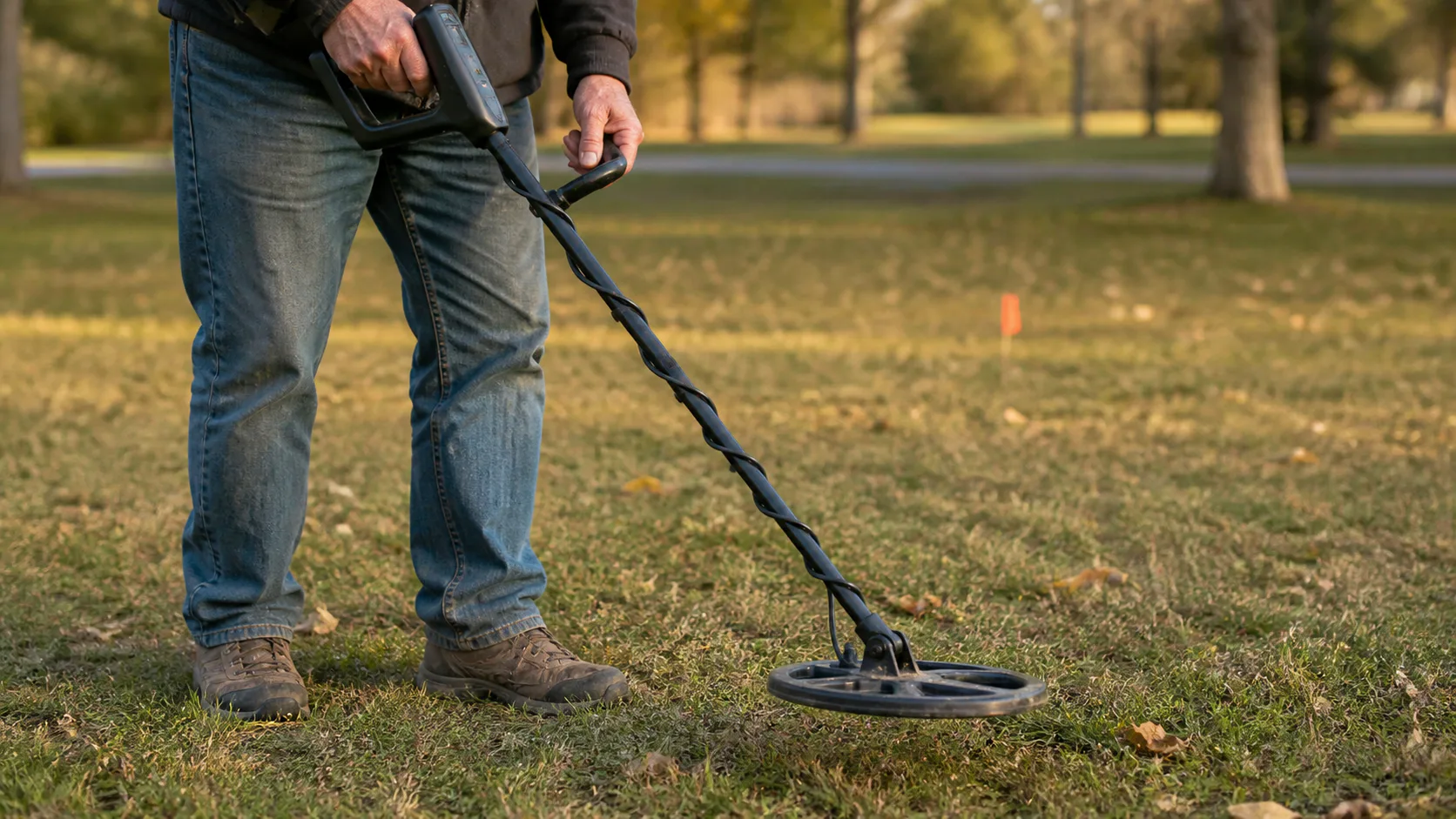
How to use a metal detector: ground balance it to your soil, keep the coil about an inch off the ground, swing slowly side to side with 50% overlap between passes, and dig every repeatable signal until you learn what your target IDs mean. That's the whole method — everything else is refinement.
Most beginners lose finds to two habits: swinging too fast and lifting the coil at the end of each sweep. Fix those in your first hour and you'll outperform people who've owned a detector for a year.
01Before you leave the house
Assemble the detector and adjust the shaft so you can stand up straight with a slightly bent arm and the coil flat on the ground. If you're hunched over, the shaft is too short, and your back will end the hunt before your battery does.
Charge everything, pack a digging tool, a pouch for finds and one for trash, gloves, and water. Then check the rules for where you're going — many parks are fine, some need a permit, and national parks prohibit detecting outright.
02Setting up on site
- 1Switch on away from your car, buried cables, and light poles — metal nearby confuses the initial setup.
- 2Ground balance. This is the detector measuring your soil's mineralization so it can ignore it. Most machines do it automatically: hold the trigger and pump the coil up and down a few inches over clean ground until the readings settle.
- 3Set sensitivity as high as you can without constant chatter. If it's noisy, drop it until it settles — a stable machine at 70% finds more than a screaming one at 100%.
- 4Start with low or no discrimination. You'll dig more junk, and you'll learn far faster what each target ID actually means in your soil.
- 5Do a bench test: wave a nail, a pull tab, a nickel, and a quarter across the coil and note what each reads. Those four numbers are your reference for the day.
Ground balance is the step beginners skip and then wonder why their detector is deaf or screaming. It takes fifteen seconds and it's the difference between a machine that works and one that fights you.
03How to actually swing
- 1Keep the coil about an inch off the ground and parallel to it — not tilted, not lifting at the ends of the sweep.
- 2Swing side to side across your body, taking two to three seconds per pass. If it feels too slow, it's about right.
- 3Overlap each sweep by about half a coil width. Detection fields are narrower than the coil looks.
- 4Step forward about half a coil width between sweeps and keep the pattern tight. Grid the area rather than wandering.
- 5When you get a signal, sweep it from two directions. A target that repeats from both is worth digging; one that only sounds from one angle is usually junk or ground noise.
The single most common beginner mistake is lifting the coil at the end of each swing, which arcs it up and away from the ground exactly where you're trying to detect. Watch your own coil for a few minutes — almost everyone does it.
04Reading target IDs
Your detector puts a number on screen for each hit. Iron reads low or negative, foil and small gold read low-to-middle, nickels sit in the middle, and copper and silver coins read high. The exact numbers vary by machine and by soil, which is why the bench test matters.
A stable, repeatable number from multiple angles usually means a good target. A number that jumps wildly usually means iron, a target on edge, or two objects close together — which is worth digging in an old site, because a good coin next to a nail reads exactly like that.
Dig everything for your first several hunts, including the junk. Every dug target teaches you what that number means in your ground, and there's no shortcut around it.
05Digging a target without wrecking the ground
- 1Pinpoint first — use your detector's pinpoint mode to narrow the target to a spot, then a handheld pinpointer once the hole is open.
- 2Cut a neat plug: three sides of a U, about 6 inches across, hinged on the fourth side so it folds back like a flap.
- 3Fold the plug back on its hinge, keeping the grass intact and attached.
- 4Check the hole with your pinpointer. If the target isn't in the hole, it's in the loose soil you removed — scan that pile.
- 5Replace the plug, press it down firmly with your foot, and scatter any loose soil. Done right, nobody can tell you were there.
This is the part that keeps sites open. A detectorist who leaves holes loses access for everyone in the area, and it happens constantly. Fill every hole, carry out every piece of trash you dig, and leave the place tidier than you found it.
06Where to hunt first
Old parks, school fields, sports grounds, and the edges of long-established properties. You're looking for places where people have gathered for decades — age of the site matters far more than how remote it is.
Get permission for private land, always, and in writing if you can. Then hunt the boring-looking parts: the strip along a fence, the shade under a big old tree, the ground beside a footpath. Those beat the obvious open middle almost every time.
07The habits that separate good detectorists from frustrated ones
Slow down. Genuinely. Almost nobody swings too slowly.
Grid your site instead of wandering. Cover a small area properly rather than a large one badly — a hunted-out park usually just means a badly hunted park.
Hunt the same site repeatedly. Different soil moisture, different angle of approach, and your improving ear will all turn up targets you walked over last time.
Keep a log. Site, date, settings, finds. After a season it's the most useful thing you own.
FAQ
- How do you use a metal detector for the first time?
- Assemble it to your height, switch it on away from metal, ground balance it, and set sensitivity just below where it starts chattering. Then swing slowly and low with 50% overlap and dig every repeatable signal — the junk teaches you what your numbers mean.
- How slow should you swing a metal detector?
- About two to three seconds per pass, side to side. Nearly every beginner swings too fast; a slower sweep gives the detector time to process each target and dramatically improves what it hears.
- How high should you hold a metal detector coil?
- About an inch off the ground, kept flat and parallel. Lifting the coil at the ends of your sweep is the most common beginner mistake and costs you depth exactly where you're trying to detect.
- Should beginners use discrimination?
- Use very little at first. Discrimination hides targets, and until you know what each target ID means in your own soil, you're hiding the education along with the junk. Dig everything for your first several hunts.
- Do you need permission to metal detect?
- For private land, always. For public land it varies — many city parks allow it, some require a permit, and national parks prohibit it outright. Check the specific rules for each site before you dig.